Paleontological exposition on the 25 May 2024, Geneva
This was the first exhibition of my collection; up to now all the specimens were kept in boxes in my room (and until 2022 in Moscow I had a room where I exposed some fossils). My dad once told me that I could get a room for one day to organize an exposition. Therefor, I started to prepare the specimens and the lecture that I was going to read on the exposition.
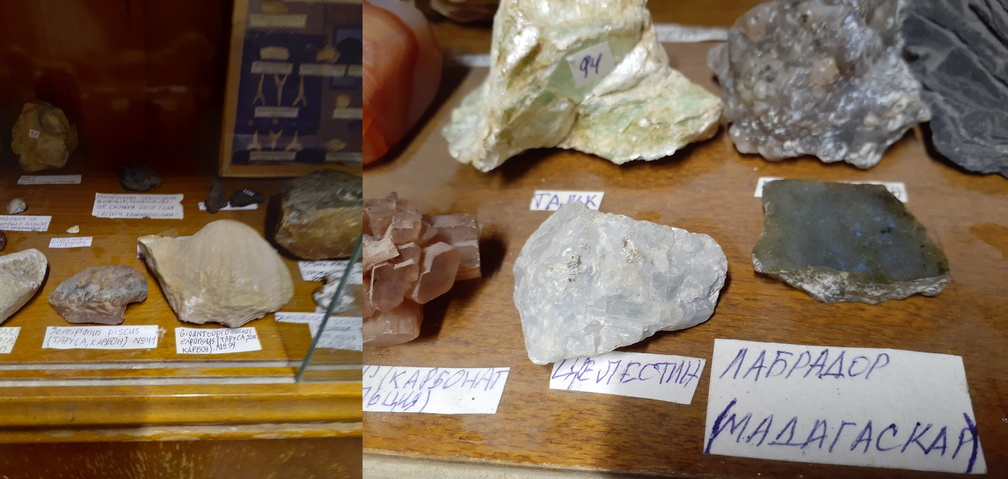
Some specimens from my collection exposed in Moscow, 2019.
I already started to prepare the exposition in early March. In march, I already chose the specimens I wanted to expose and wrote the text for my presentation, in which I only made some correction in May. However, many things that had nothing to do with the exposition actually disturbed me and took most of my time. The exposition took place on the 25 May. As I understand now, I should have started preparation even earlier, so I could focus on organization the last weeks before the exposition, and some last-moment organizations problems could have been avoided. As an example of such a problem, I put number 9 instead of 11 as the address on the exposition affiche, and noticed it when it was already sent. If I had enough time, I could have read it 10 times before sending.
I told about the exposition to many acquaintances, and also asked a teacher from my school to send the affiche of the exposition to the whole school, which he did.
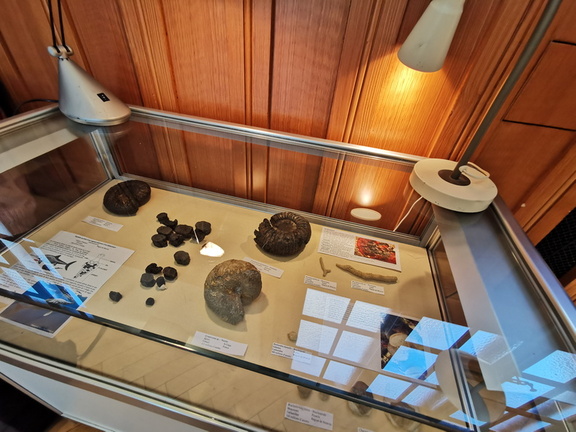
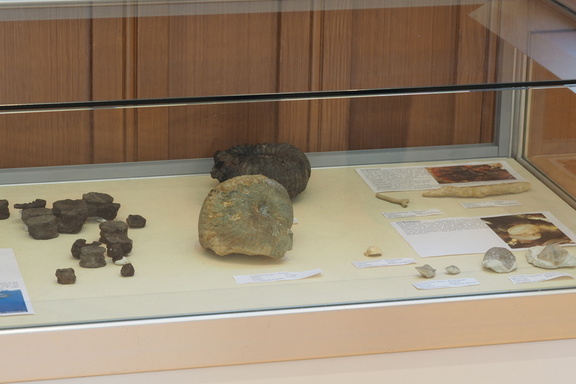
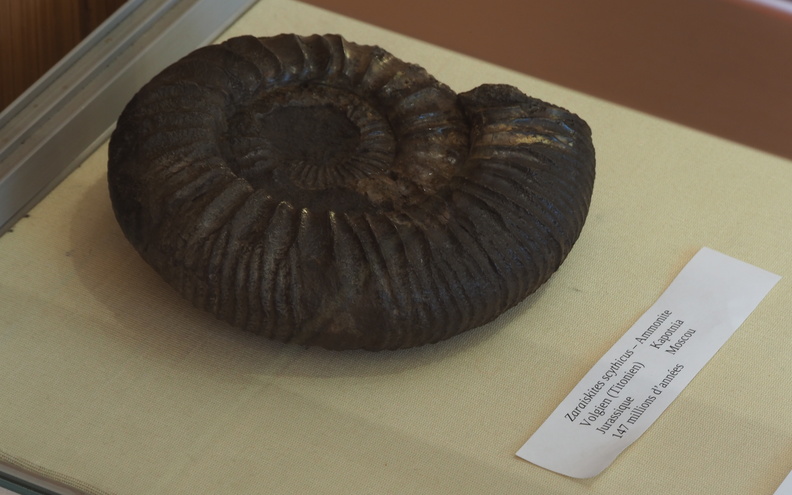
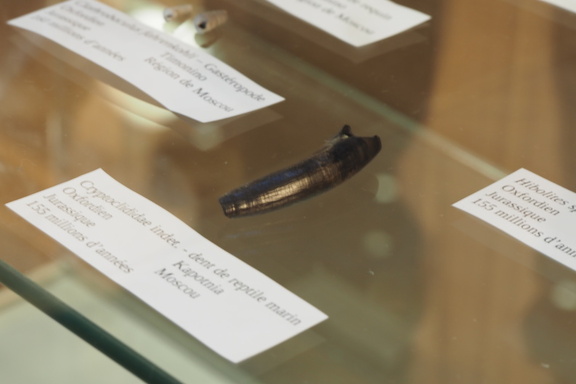
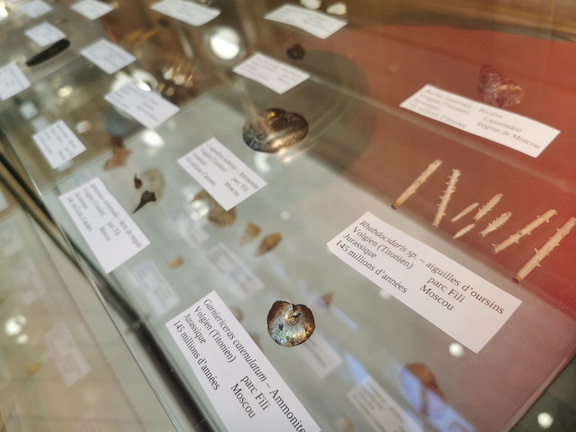
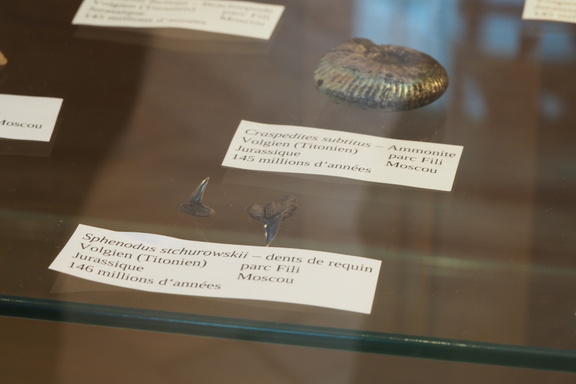
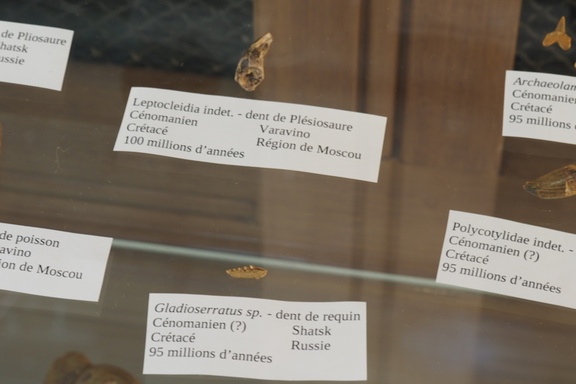
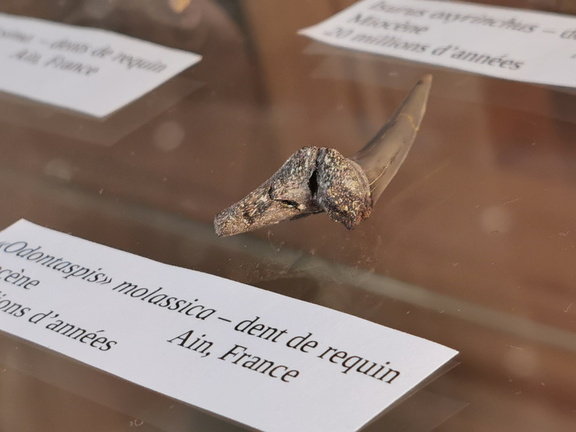
I exposed fossils from Russia as well as recent specimens from France and Switzerland: shark teeth (from the Carboniferous, Jurassic, Cretaceous and Neogene), Mesozoic marine reptiles’ bones, Jurassic and Cretaceous ammonites, bivalves, gastropods, brachiopods, bryozoans and some other fossils. They were disposed in vitrines that I borrowed at the SGAM. Some specimens had descriptions and images. Everyone knows what sharks are, but few people know about brachiopods and bryozoans.
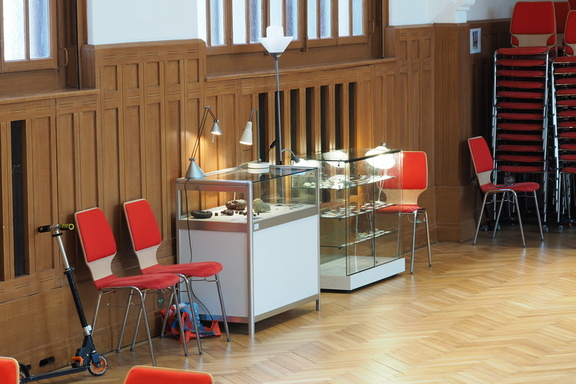
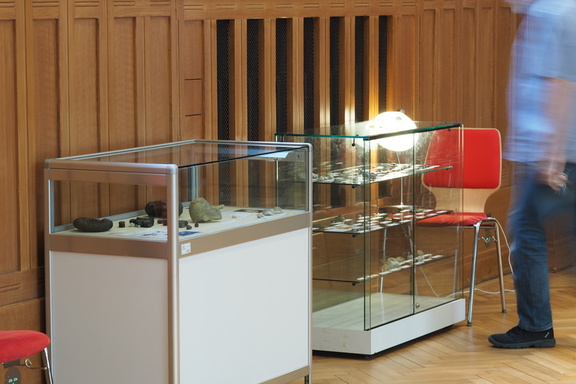
I disposed the specimens in 2 vitrines.
I actually should have prepared more vitrines to make the specimens and labels more visible.
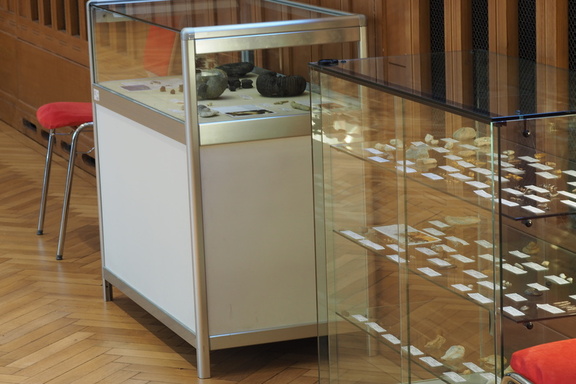
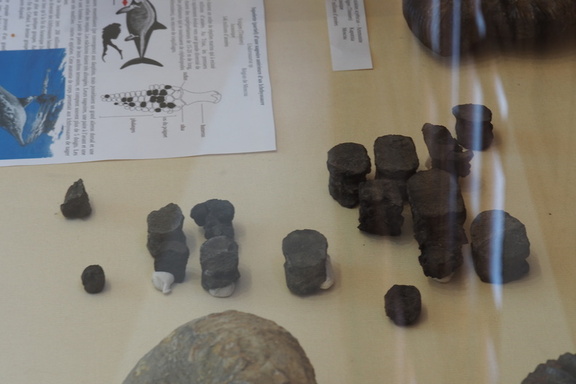
Ichthyosaur forelimb
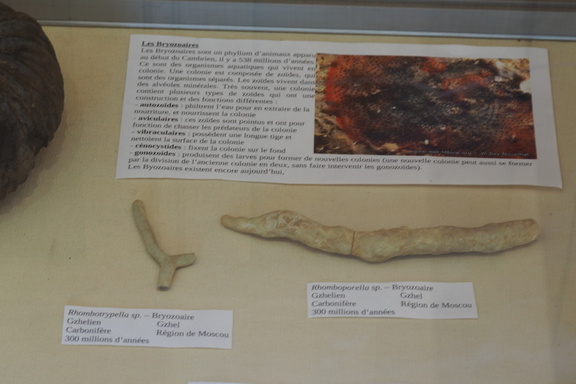
Bryozoans (early Carboniferous) and their description.
The presentation was divided into 5 parts:
- Introduction part. What is paleontology. How fossils are preserved.
- Geological history of Switzerland. This part was about ancient seas and oceans in Switzerland : the Tethys ocean and the North Alpine foreland basin.
- About expeditions, how and where to search fossils.
- Scientific significance of fossils. I discussed muscle imprints on ammonite fossil shells, shark evolution, biostratigraphy, determination of ancient environmental conditions using fossils.
- Some addresses of geological and paleontological clubs in Switzerland, and some paleontological websites.
I should have added a part about fossil preparation, but this will be for another time.
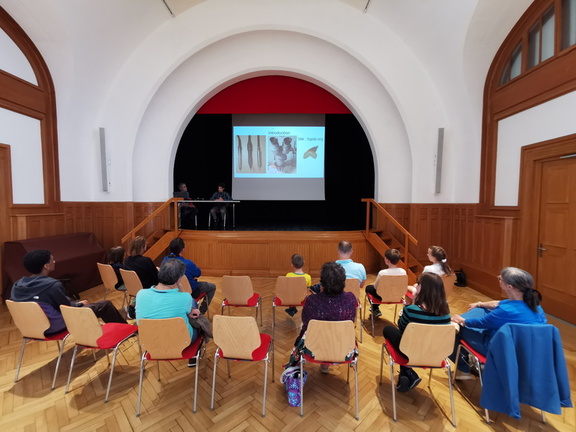
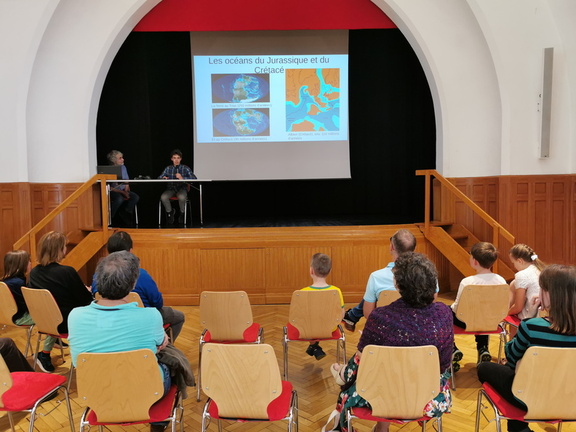
Roughly 15 persons came for the presentation. It looked like everyone found it interesting, there were some questions. And there was around 20-25 people on the exposition. Three people from my school came as well, and one of them was very impressed to see shark teeth that are 330 million years old. I must say that the exposition went well, and it is always good for the specimens to get out of their boxes.